









By Damian Martinez, journalist at G&M News.
The European Audiovisual Observatory, part of the Council of Europe in Strasbourg, has published its latest report, Legal challenges and market dynamics in the video games sector. This is the first time the Observatory has ever looked at the gaming industry and the result is a comprehensive round-up of the current state of the legal and market landscape in Europe.
Authored by leading experts from across Europe, this new report highlights the rapid evolution of this sector, from market growth and technological advancements to the accompanying regulatory frameworks and user protection. Covering industry structure, economic models, intellectual property (IP) protection, and player safety, this new report is divided into three main parts and provides key insights into one of Europe’s most dynamic creative industries.
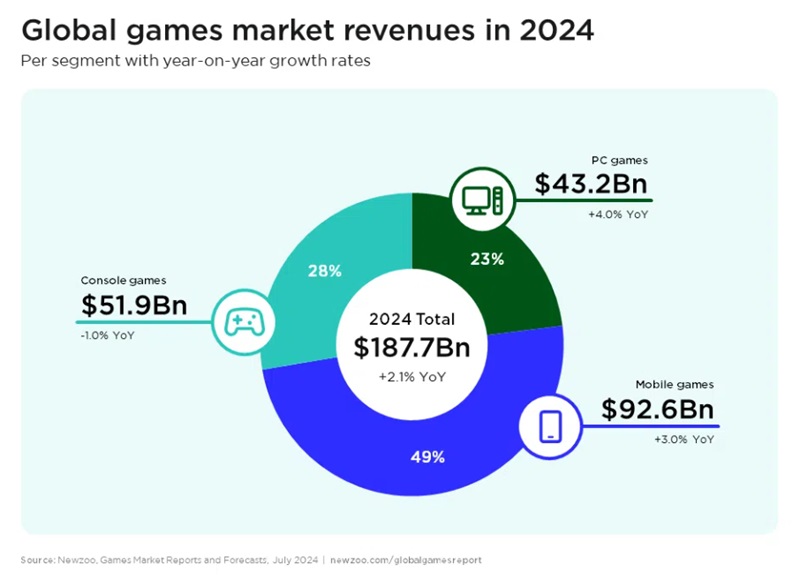
The video games industry in Europe has undergone significant transformations over the past five decades, evolving from a simple form of entertainment to a multifaceted economic powerhouse. This evolution reflects not only technological advancements, but also changes in consumer behavior and market dynamics. The industry’s growth has positioned it as a major player in the economy, with global revenues generated by players estimated at around USD 187 billion in 2024.
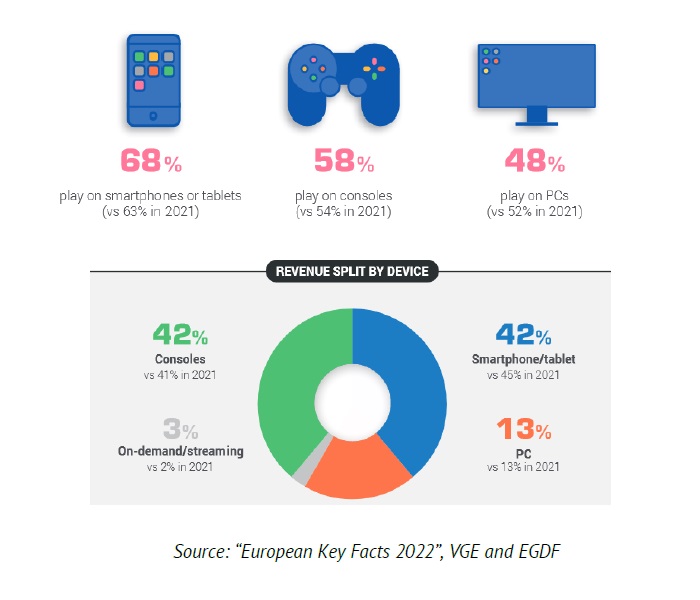
Now, the sector is segmented into game genres (such as strategy, adventure, role-playing, and sports) and devices, ranging from consoles to mobile gaming. Economic models have also diversified, with free-to-play and subscription models complementing traditional one-off purchase systems. The rise of free-to-play models has reshaped revenue strategies, emphasizing player retention over initial sales, and expanding the audience beyond traditional gamers.
Specific challenges include regulatory scrutiny of some economic models, such as hyper casual games and loot boxes, and Government intervention; for example, China’s restrictions on the use of video games, impacting major companies like Tencent and NetEase. These factors highlight the industry’s sensitivity to external forces and its rapid evolution in response to technological, regulatory, and market changes.
European video game history
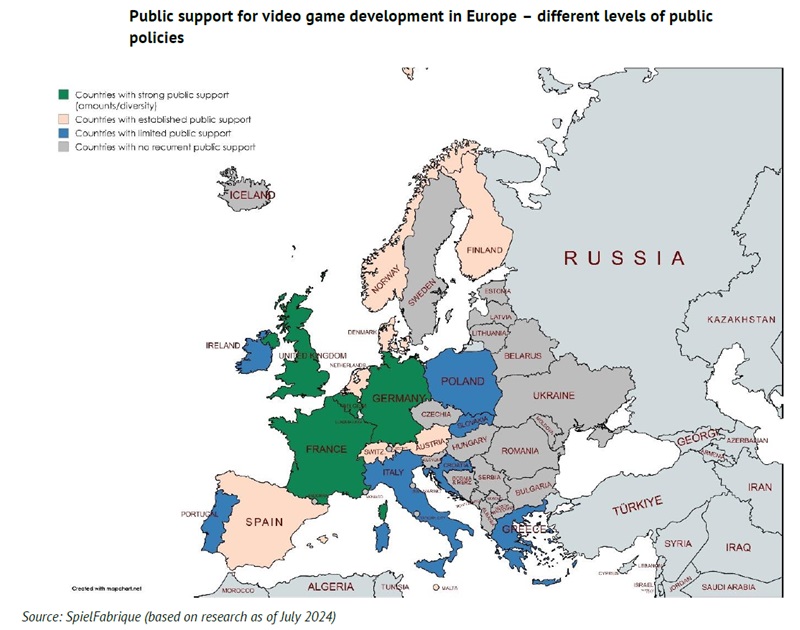
Historically, the United Kingdom, France, and Germany have been at the forefront of game development, with notable studios emerging since the 1980s. Countries like Sweden and Poland have also made their mark, contributing to a diverse ecosystem of approximately 5,300 studios across Europe. Industry’s growth has been fueled by digitalization, allowing games to reach a global audience while adapting to various languages and cultures.
As the sector continues to expand, it is becoming increasingly competitive, requiring European studios to attract talent and investment while navigating challenges posed by major players from North America and Asia.
The evolution of business models
Similarly, the growth of the Internet and game digitization paved the way for new revenue models. The initial model saw games sold as individual products, initially in a box containing a cartridge or a CD-ROM; later, they were sold in digital form. Moreover, the development of the Internet led to the emergence of other models.
The freemium model, for example, gives players free access to a game and generates income by selling additional features that can make the game more enjoyable or accelerate player progress. Under the advertising model, commercial messages appear in the game. On the other hand, the subscription-based model, which is similar to that used in the music and audiovisual sectors, provides unlimited access to a game library.
Later, the rapid growth of the Free2Play model, which enables players to play free of charge, was also a radical innovation. Player retention became the key: it was no longer a case of encouraging consumers to buy a game, but of drawing them into a game in which, the longer they played, the more money could be made (through advertising or the sale of additional features).
Changes and challenges
In recent times, the video games industry has experienced ups and downs, suggesting that it is subject to a certain volatility. Various factors are in play here, whether health-related (COVID-19), political (regulation in China), technological (GaaS) or regulatory (tax credits, regulation of loot boxes), strategic decisions taken by sector stakeholders (Apple) or disruptive innovations such as the emergence of Fortnite.
Changes in game design and experience, the production process and the overall economics of the sector have drawn players in for long periods in a context in which publishers compete for their time. These possibilities were highlighted with the release of Fortnite Battle Royale in 2017, a game that was played by 125 million people in less than a year, 250 million in 2019 and 500 million in 2023.
The growth of Games as a Service (GaaS) and the success of subscription-based revenue models in the audiovisual and music industries (for example Netflix or Spotify) suggested that such a model could also succeed in the video games sector, where it became known as “cloud gaming”. Several companies decided to enter this developing market.
As in the other industries mentioned, these included sector stakeholders keen to exploit their catalogue (Ubisoft, EA or Xbox), third-party players from the tech industry (Amazon, Apple, Google or Nvidia) and companies from other sectors that wanted to broaden their offering (Netflix).
Good current indicators
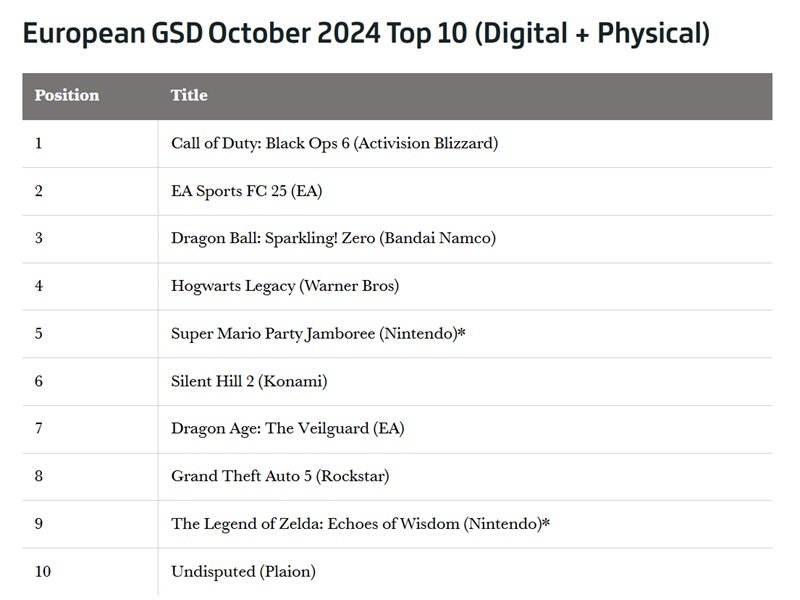
While the future seems uncertain, currently, the video games industry in Europe shows signs of good health. In October 2024, 18.5 million video games were sold across Europe, a 12.4% jump compared with the same five-week period last year, on the back of blockbuster launches.
In the Top 10 ranking of sales, we can mention: Call of Duty: Black Ops 6 (Activision Blizzard), EA Sports FC 25 (Electronic Arts), Dragon Ball: Sparking! Zero (Bandai Namco), Hogwarts Legacy (Warner Bros), Super Mario Party Jamboree (Nintendo), Silent Hill 2 (Konami), Dragon Age: The Veilguard (Electronic Arts), Grand Theft Auto 5 (Rockstar), The Legend of Zelda: Echoes of Wisdom (Nintendo), and Undisputed (Plaion).
This shows that video game fanaticism is still latent among young people (and not so young) on the European continent.