









By Tatiana Martins, journalist at G&M News.
Gambling is not just about bets and games. It’s deeply shaped by culture, tradition, and societal values. Asian and European markets may both enjoy gaming, but the undercurrents that guide player behavior could not be more distinct.
Asia: tradition, superstition, and high stakes
In many East Asian cultures, gambling is tightly intertwined with long-held traditions and beliefs. In mainland China, most forms of gambling are banned, but persistent cultural appeal endures. For example, Mahjong remains not only a game, but also a staple of social gatherings and celebrations, reflecting notions of luck and shared fortune.
Macau dramatically illustrates the tension between restriction and permissiveness. Despite China’s strict ban, Macau operates as a separate regulatory region and has become an elite global gambling hub, catering to high rollers who flock from the mainland, highlighting both divergence and desire.
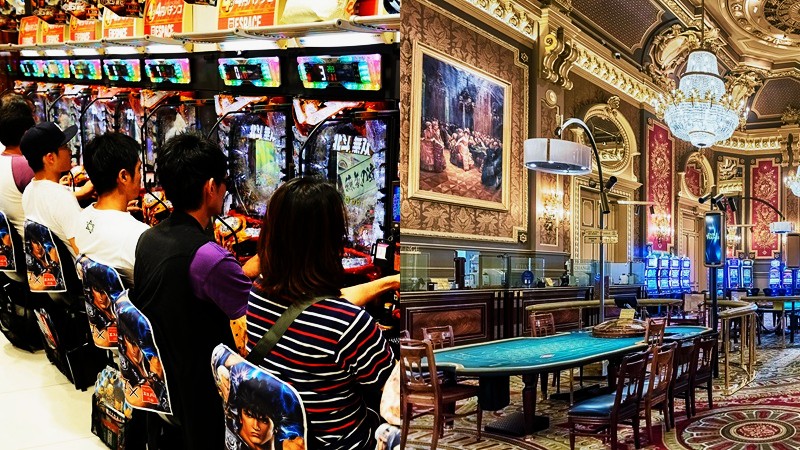
Japan, too, offers a fascinating duality. Pachinko, a pinball-like game, thrives in a legal gray zone, seen more as a cultural pastime than a formal casino game. While formal casinos have only recently been legalized, they’re framed as part of integrated resorts and entertainment, rather than standalone gambling venues.
Europe: leisure, regulation, and diversity
Europe’s relationship with gambling is more institutionalized and socially accepted. Many countries treat it as mainstream entertainment, regulated through licensing, consumer protection frameworks, and responsible gambling policies.
In territories like the UK, France, and Italy, regulatory systems prioritize player protection and industry fairness. Take the UK’s Gambling Act of 2005: it’s a clear example of balancing liberal market principles with strong oversight. Likewise, Scandinavian nations often operate under state-run monopolies focused on minimizing harm through affordability checks, self-exclusion programs, and advertising limits.
Europe showcases a wide range of preferences: lotteries, slot machines, sports betting, and table games all attract different demographics. The market leans toward recreation more than high-stakes spectacle, emphasizing access, variety, and consumer safeguards.
Key differences
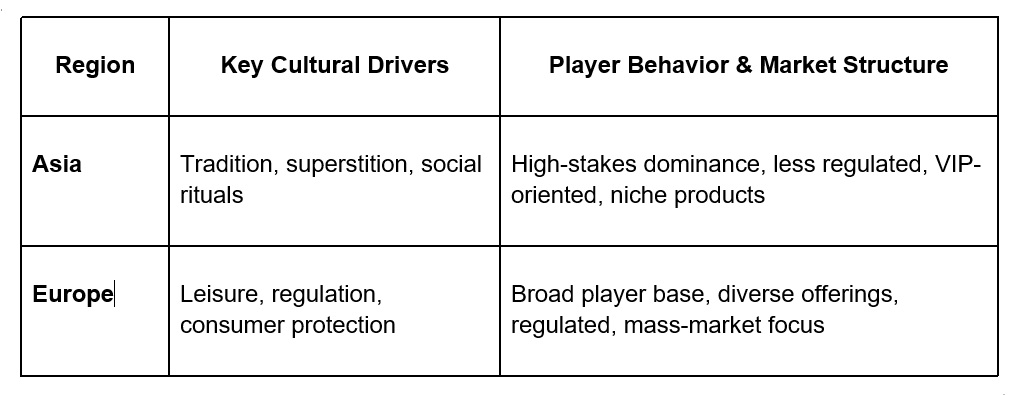
Asia’s gambling behavior is powered by cultural rituals and group engagement, with games tied to numerology or communal celebrations. European markets, in contrast, emphasize structured accessibility, fairness, and responsible gaming frameworks.
What does this situation mean for operators
To succeed, iGaming operators must grasp those cultural undercurrents:
- Asia: leverage localized games, rituals, and VIP experiences, understanding that a site banned by regulation may still be accessed via underground or offshore platforms.
- Europe: focus on trust-building, regulatory compliance, safer gambling tools, and broad product mixes tailored to diverse user segments.
The contrast between Asia and Europe in the gambling world illustrates more than regulatory variation. It reflects how deeply culture shapes what players seek. Asian markets are driven by tradition, exclusivity, and superstition, while Europe thrives on structure, equity, and entertainment. Understanding these distinctions is essential for any operator or investor navigating global iGaming.