








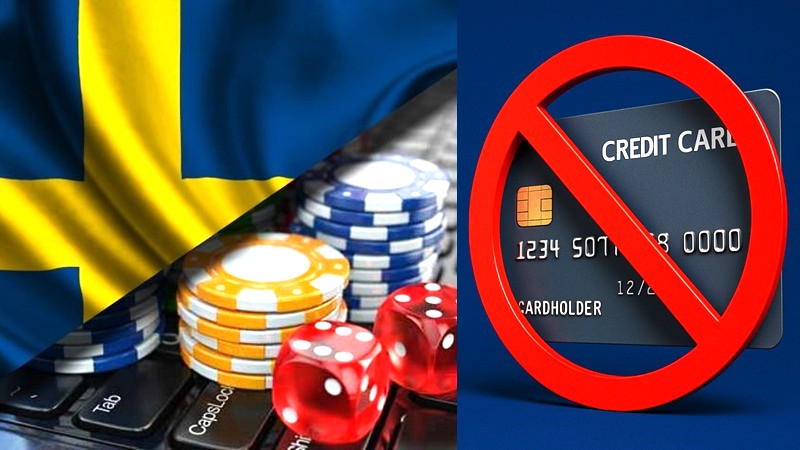
Next year, will see one of Sweden’s most sweeping changes to its gambling act since 2018. Its regulatory authority, the Spelinspektionen, has initiated a ban on all forms of gambling credit. In play across most forms of gambling, operators will no longer be allowed to accept payment that originates from credit. This includes cards, overdrafts, loans, and buy-now-pay-later offers.
The Compliance Demands of a Credit Ban
With Sweden set to implement a full credit ban on gambling from April 2026, licensed operators are increasingly emphasizing secure and transparent platforms. An overview of the most trusted online casinos in Sweden for this year shows how these sites prioritize fair play, reliable payments, and regulatory compliance, reflecting the broader shift toward responsible and legally safe gambling practices. These operators will now have to go one step further, testing and auditing their processing systems to ensure that customer payments do not come from credit-based options.
This follows on from a partial ban on credit payments, implemented in 2019, which already barred licensees from accepting credit. However, there were loopholes in this agreement, which allowed money from loans and overdrafts to operate in a grey area. There have been several attempts to expand this since, though this is the closest the regulation has ever come to being enacted. Last year, a similar bill was submitted, but it did not pass due to further clarity over the term ‘credit’ needing definition.
It has also been added that certain exemptions may apply, subject to the oversight of the gambling authority. This would mainly involve those running gambling activities which benefit the public, such as charity lotteries.
Enforcement Risks of Sweden’s Credit Ban
The Spelinspektionen itself will enforce the regulations, though with assistance from Sweden’s financial authority Finansinspektionen and the national consumer agency, Konsumentverket. Its powers have been expanded, allowing it to issue penalties to those who fall foul of new regulations. At worst, a license from gambling operators could be revoked. Lesser infringements may involve fines and penalties.
It will not require the operator to carry out invasive efforts into individual financial situations, however. It will instead require them to act when clear signals of credit violations are apparent. This may include flags raised through anti-money laundering and know your customer procedures.
Internal monitoring systems will also play a part in this. Thus, operators will need to employ robust preventative measures, which could include blocking credit card payments and not promoting third-party lenders within their platforms.
Market Impact of a Credit Ban
Sweden is trying to tackle a rising debt that its citizens have built up through gambling. A recent investigation, known as Överskuldsättningsutredningen, looked at the rising levels of debt and their relationship to credit use in gambling. This reached a record SEK138 billion (USD 14.6 billion) in January of 2025. Added to this were figures from a further study that showed between 3 to 4% of the population had some degree of problem gambling. Furthermore, 40% of those people played slots or casino games.
Concerns are that the implementation of this requires considerable technical involvement to enforce. One of the main bugbears for operators is distinguishing between debit and credit card transactions. It is also difficult to tell where the money transferred has come from, and if it originates from an overdraft or a loan. This also must be enforced across a widening range of payment methods, encompassing everything from card payments to e-wallets.
One trade association, the Branschföreningen för Onlinespel (BOS), has stated that the responsibility for blocking this should lie with payment processors and financial institutions, rather than solely being the domain of gambling operators. There are worries that large burdens placed on companies such as this will have an impact on consumers. This could see them move to offshore operators, the opposite of what Sweden is trying to achieve with its channelization rates.
This change will join a range of potential adaptations to the law scheduled for 2026. Penalties not just for unlicensed operators that target Swedish customers are on the cards, but for actual participation by a Swedish user. This means that operators abroad who do not target Swedish customers, but have them using their services, may be in the firing line. It is hoped this will improve channelization rates and bring customers back to licensed Swedish operators.
This enforcement is indicative of a wider, global movement in the iGaming sector to tighten compliance. It shows that the iGaming market must keep up with changes to protect the consumer in a rapidly evolving world of digital financial products and services. This involves not just issues stemming from entertainment and gambling, but also potential investment and financial opportunities.