








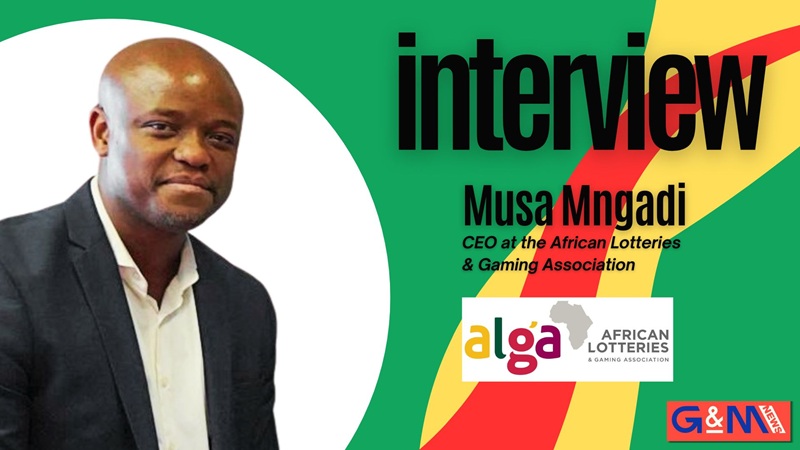
Why did ALGA decide to hold the successful first CEO’s Forum in South Africa, bringing together gaming leaders from 23 African countries? What is your assessment of this important meeting?
The CEOs Forum was born from the need to create a unified platform for dialogue, collaboration, and knowledge sharing among gaming leaders across the continent. We recognized that while Africa’s gaming landscape is rich with potential, it often operates in silos, with each country navigating its own regulatory, technological, and developmental challenges. By hosting the first Forum in South Africa, a country that has long served as a key hub for gaming regulation and innovation, we aimed to set a benchmark for meaningful engagement. To say it was a success would be an understatement. The gathering laid a strong foundation for cross-border partnerships, collective policy thinking, and the elevation of Africa’s gaming narrative onto a global stage. It was not just an event, but the beginning of a continental movement towards responsible, inclusive, and sustainable gaming development.
Since its creation in 2018, ALGA has played a key role in shaping responsible, sustainable, and innovative gaming practices across the continent. Do you think this organization’s efforts have served to raise awareness and establish safer and more regulated gaming in different countries in the region?
Our organization exists for the primary purpose of convening governments, regulators, and industry leaders to foster safer and more responsible gaming across the continent. From the very beginning, our mission has been to address the fragmentation that exists within Africa’s gaming ecosystem and to champion tangible reform. Through platforms like the CEOs Forum and several ongoing initiatives, we have not only raised awareness but have actively encouraged the establishment of more structured, transparent, and collaborative regulatory frameworks. The progress we’ve witnessed in the adoption of responsible gaming principles and cross-border dialogue is a testament to the impact of these collective efforts.
Africa holds a unique position as a rapidly growing gaming market. What achievements have been made in recent years, and what aspects should be emphasized to continue evolving?
There have been several notable achievements across the continent in recent years. For instance, Kenya has taken decisive steps by implementing a ban on gambling advertising, a progressive move toward protecting vulnerable communities. Similarly, Botswana has introduced an exemplary workshop model that equips casino workers to identify the signs of problem gambling, strengthening the foundation for responsible gaming. However, these milestones lose their full impact if progress remains uneven across the continent. When certain regions advance while others lag behind, the sector’s collective growth becomes fragmented. Leaders operating in isolation limit the shared potential of our economies. This is why fostering unity, knowledge exchange, and regulatory collaboration is essential. Yet, the diversity of regulation across Africa also highlights the fragmented nature of our frameworks. While some economies are progressing, others are stagnant and that shouldn’t be the case if our end goal is the same: a continent-wide culture of responsible, innovative, and sustainable gaming. Progress cannot thrive in isolation. By fostering unity, knowledge sharing, and regulatory collaboration, we ensure that all markets move forward together, strengthening both individual economies and Africa’s gaming industry as a whole.
An emerging market as well, Latin America has made progress in regulating online gaming in various territories. What examples can Africa draw from the Latin American region, and how could stronger ties be established between Latin American gaming associations and African ones like ALGA?
Latin America offers several instructive examples in regulating online gaming. Colombia, for instance, established a comprehensive framework through Coljuegos, implementing responsible gaming measures such as self-exclusion, deposit limits, and risk behavior detection. Brazil recently launched a federal licensing regime for online betting, enforcing strict compliance, taxation, and advertising rules. Even Peru and Argentina illustrate different approaches. Peru has a unified national model, while Argentina uses a provincial, decentralized system, each reflecting their unique market contexts. For Africa, the key lesson is that regulation must be tailored to local realities. Our mobile first populations and emerging markets require solutions that balance innovation, consumer protection, and market growth. We cannot assume a one-size-fits-all approach. By studying Latin American models, identifying key drivers of successful regulation, and avoiding over regulation that could push players to illegal platforms, we can craft frameworks that foster both growth and safety. Stronger ties between African and Latin American gaming associations can be established through joint forums, knowledge exchange, collaborative research, and benchmarking exercises. This allows both regions to learn from each other’s experiences, understanding how licensing, taxation, responsible gaming, and enforcement work in different contexts while adapting strategies to local needs. The goal is not merely to emulate but to innovate responsibly, ensuring that Africa’s online gaming markets grow sustainably and inclusively.
What opportunities do you see for gaming and lotteries in Africa in the coming years, and how will ALGA continue to work in the quest to harmonize regulation, foster collaboration, and drive responsible growth in the industry?
The spirit of optimism in Africa’s gaming industry is alive and well. We are entering a future that is accountable, authentic, and full of potential for innovation and growth. Across the continent, there are opportunities to harness technology, expand online platforms responsibly, and develop diverse products that meet the needs of a mobile first generation. ALGA will continue to play a central role in this evolution by fostering harmonized regulatory frameworks that respect each country’s context while encouraging continental collaboration. We will strengthen partnerships between governments, operators, and regulators to ensure knowledge sharing and best practice adoption. Recognition from the gaming industry in other regions, such as Latin America, further reinforces our efforts, allowing us to speak and spread the African Agenda on platforms such as G&M News, for which we are immensely grateful. By emphasizing responsible growth and consumer protection, we aim to build a sustainable gaming ecosystem that benefits all stakeholders. The African gaming industry has the chance to set global standards in innovation, inclusion, and accountability. Our work will ensure that as the market grows, it does so responsibly, collaboratively, and in a way that contributes positively to Africa’s economies and communities.