









By Ulises Gil, journalist at G&M News.
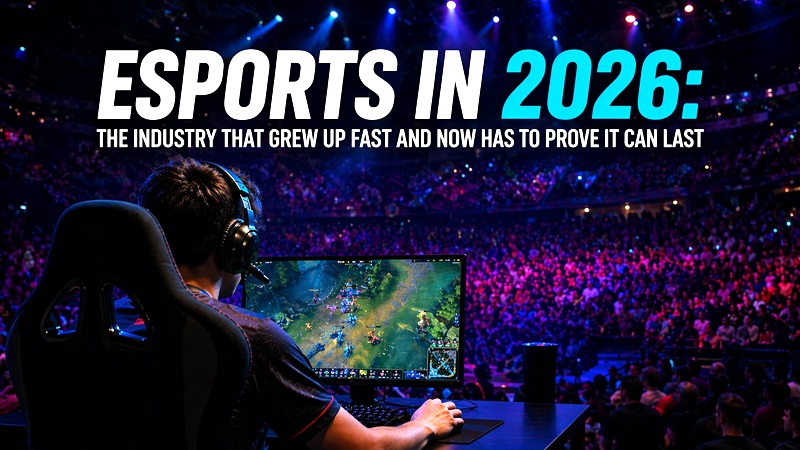
For iGaming operators, Esports has long represented a tantalizing audience: young, digitally native, highly engaged, and growing fast. The numbers still back that up: the global Esports market is projected to reach USD 5.1 billion in 2026, with a fan base approaching 641 million worldwide. However, conversation in the industry has changed. Growth is no longer the headline; survival is.
From boom to business
Esports spent years scaling on the back of investor enthusiasm and publisher-driven leagues. That phase is over. Financial investors are reaching the end of their fund cycles, and the pressure to exit is mounting, even for organizations that are technically profitable. The result is a wave of consolidation, acquisitions, and operational restructuring across tournament operators, publishers, and teams alike.
What’s replacing speculative capital is a more sober focus on diversified revenue. Sponsorships and media rights already account for around 65% of industry revenue, but organizations are increasingly looking for additional streams: merchandise, content licensing, and where regulation allows, betting partnerships. That last category is particularly relevant for iGaming. With some publishers now opening the door to regulated sportsbook deals and others maintaining strict prohibitions, the landscape is fragmented but moving in a favorable direction for operators with the right compliance infrastructure.
Mobile changes everything
Perhaps the most significant structural shift for iGaming operators to understand is the rise of mobile Esports. What was once considered a secondary format -popular in Southeast Asia but marginal elsewhere- has crossed into mainstream status globally. Mobile Legends: Bang Bang will be an official medal sport at the 2026 Asian Games. TikTok Live is driving mobile eEssports content to audiences that traditional streaming platforms never reached.
For operators building Esports betting products, this matters. Mobile titles attract different audiences, operate on different schedules, and require different data infrastructure than PC-based leagues. Operators who move early to cover mobile Esports markets (particularly in Latin America, where mobile gaming penetration is high) will have a structural advantage.
What operators should watch
Three trends are worth tracking closely. First, the move toward always-on engagement: rather than building betting products around isolated tournament spikes, successful operators will need to support season-long narratives and recurring competition formats that keep users active between major events. Second, nation-based formats are gaining traction globally. Head-to-head country matchups generate strong emotional engagement and are expanding beyond their Southeast Asian stronghold into the Middle East and Latin America. Third, the formalization of Tier 2 and Tier 3 ecosystems is creating new betting inventory that didn’t exist at scale before.
Esports in 2026 is not the wild frontier it was five years ago. It is becoming a mature entertainment vertical, one that rewards structural investment over opportunistic positioning. For iGaming operators willing to engage with it on those terms, the audience and the opportunity remain very much intact.