









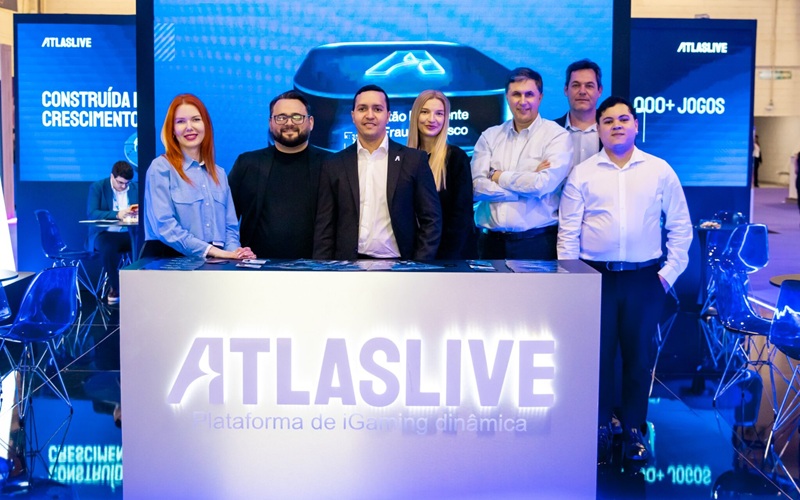
By Ulises Gil, journalist at G&M News.
Over the years, Atlaslive has been consolidating its presence in Latin America with a proposition that inverts the logic that has historically defined the regional B2B market. While many providers sell global technology and then try to adapt it to the region, the company’s architecture was designed from the outset for markets characterized by regulatory volatility, payment fragmentation, and players who demand real-time experiences, precisely the traits that define LatAm.
A central element of the company’s positioning is its development model: feedback from active operators feeds directly into the product roadmap. The mechanism is presented not as a commercial promise but as the way product evolution actually works at Atlaslive, with operators holding influence over development priorities rather than relying solely on support channels. To this is added the capacity to operate across multiple markets from a single platform, with independent configurations by region, local compliance, and centralized management, eliminating layers of operational complexity that, in other platforms, tend to be resolved through costly and fragile integrations.
Three priorities for 2026
The company’s 2026 roadmap concentrates on three areas that respond directly to operator demand in the region: sportsbook depth, conversion flow optimization, and retention power.
In sportsbook, the work goes beyond expanding market and league coverage, already broad across pre-match and live across multiple feeds. The emphasis is placed on tools that increase player engagement and retention. In casino, the focus shifts to conversion UX and intelligence over registration and deposit flows, with operators able to configure those flows independently by market, recognizing that player behavior in Brazil is not equivalent to that of Mexico, nor is the abandonment point in onboarding.
In retention, Atlaslive points to its CRM engine -with more than 100 behavioral triggers operating in real time- and its gamification and loyalty stack as the area where it sees the most direct impact on operator lifetime value. According to the company, operators who activate these tools correctly see measurable results within weeks, not quarters.
Regional footprint and selective expansion
Brazil remains Atlaslive‘s central priority and the market with its most consolidated presence. The company holds GLI certification specific to the Brazilian federal framework, described as an operational prerequisite rather than a marketing differentiator in a market that has just consolidated regulation at the national level. Beyond Brazil, expansion is advancing over markets with active regulation and operators with real growth profiles: Mexico, Peru, and Argentina form part of the current focus, each with its own dynamics. Markets like Chile, advancing through their regulatory processes, sit within the company’s medium-term strategic vision.
Tropicalization as architecture
For Atlaslive, real tropicalization goes beyond translating an interface into Spanish or Portuguese. It means understanding how each market operates in its regulatory, cultural, and financial specificity, and having the architecture to respond without forcing the operator to resolve those differences alone.
Brazil is the firm’s clearest reference case. The GLI certification for the federal framework demanded time, resources, and knowledge of the local landscape. On the payments side, the country presents a particularity that does not exist in any other regional market: Pix is the only payment method permitted for regulated operators, which simplifies the equation but demands that the provider have the integration perfectly stable, with high availability and zero friction.
Mexico, by contrast, presents the opposite reality. There the operator must support multiple payment methods simultaneously: credit and debit cards, SPEI, OXXO Pay, and other alternative methods with strong penetration in the informal economy. Bruno Almeida, Head of Sales for LatAm at Atlaslive, warns that “a provider without that science integrated and tested is selling a platform that the Mexican operator will have to complete on their own.”
The maturity phase of regional iGaming
The company identifies the structural challenge of LatAm as regulatory rather than technological or commercial, specifically, the uneven speed at which regional markets are evolving. Brazil regulated, Peru is maturing, Chile is in process, and Argentina remains fragmented by jurisdiction. That asymmetry forces operators and providers to maintain parallel strategies with stacks that function across distinct legal contexts simultaneously.
The second challenge is consolidation. The last 18 months have shown that LatAm does not have indefinite space for dozens of mid-sized operators: the large players are capitalizing, the smaller ones are being absorbed or disappearing. For platform providers, the most valuable contracts are increasingly contested and sales cycles increasingly long and demanding.
The concrete opportunity, however, lies precisely there: in the space between operators stuck on legacy platforms with expiring contracts, or with products that did not evolve at the pace of the regulated market, and the new compliance, UX, and retention demands that regulation brings with it. “LatAm iGaming is entering its adult phase. In that phase, those who build well survive, not those who grow fast,” Almeida concludes.