









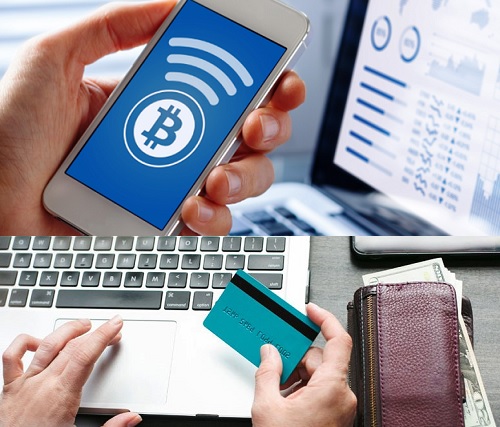
Today, nobody denies the fact that electronic commerce and its payment methods are the present of technology. In this article, we will consider different electronic payment methods, their present and future, asking ourselves what role the gaming industry wants to play in the face of these changes in user consumption patterns. Does the industry want to take a leading role or does it prefer to wait for the consolidation of these tools and the evolution of other market factors?
Being able to acquire goods and services through electronic means of payment is increasingly common. Soon, the purchase of all kinds of products with cryptocurrencies will also widespread. For example, in the City of Buenos Aires (Argentina), there are already real estate agencies that accept cryptocurrencies for the purchase of properties. How will Latin American gaming adapt to these innovations?
CHARACTERISTICS AND POSSIBILITIES
One of the characteristics of the currency is its store of value and the fact that it is widely accepted as an exchange method. On the other hand, blockchain technology allows that a third party guarantor is not necessary for this modality to work in the market. The popularity of Bitcoin with Elon Musk has provided confidence in the use of cryptocurrencies as a store of value, as well as an understanding that they can be used as an exchange method as well. In addition to trust, other key aspects for a currency are its global acceptance, non-depreciation and that it does not depend on an issuing entity (political and economic power of a State).
The iGaming industry must move quickly into the development of its electronic payment channels and be a pioneer in the use of cryptocurrencies, given that, as in games of chance, the use of a currency is determined by the trust of the user or consumer. For this to happen, both regulators and State operators in LatAm must adapt their regulations for the acceptance and general use of cryptocurrencies in their operations. In the case of private operators, several (not many) are already operating with electronic payment methods. Still, the use of cryptocurrencies as payment alternatives for their entertainment offer remains pending for them.
INTRODUCTION TO THE ANALYSIS OF DIGITAL PAYMENT METHODS
In this first part of the article, we are going to focus on the analysis and description of electronic payment methods in Argentina. Later, we will delve into cryptocurrencies and their relationship with the gaming industry in Latin America.
A payment system comprises the set of instruments, rules and procedures by which funds are transferred between economic agents. We are going to consider the Low Value Payment System and, more specifically, the digital payment methods in Argentina. The digitization of payment methods is advancing towards a new phase characterized by a process of transition from physical to virtual. It is fundamental to distinguish based on the presence of the payer, that is, between “in-person payments” versus “remote payments”, depending on whether the payer is physically in front of the counterpart of the transaction. Throughout this report, we will concentrate on remote payments, since this typology is the one that particularly favors eCommerce. Therefore, in this work, the DPMs (digital payment methods) will include: a) Debit and credit cards (as long as the appearance of the payer is not essential); b) Digital wallets, that is, simplified prepaid accounts that can have multiple user interfaces, such as mobile applications, web applications or cards, and c) Electronic transfers between bank accounts.
In Argentina, the Central Bank (BCRA) is in charge of organizing the economy’s payment system, including those aspects related to cash (its design, printing, distribution and destruction), as well as the policies aimed at promoting other means of payment such as electronic methods, the center of our analysis.
Now, why is it relevant to analyze the development of DPMs in relation to trade in general? On the one hand, the volume of transactions carried out through this type of method has experienced a substantial increase in recent years and the trend seems to maintain (and even deepen) for the future. The emergence of non-bank players that offer services in the payment industry and companies that propose cross-border person-to-person (P2P) money transfer systems represent examples of the disruptive factors related to digitization that affects the payments segment (ECLAC, 2018). On the other hand, favoring the digitization and adoption of these payment methods in a Low Value Payment System is essential within a general financial inclusion strategy. According to the IDB (2015), the development of a digital payment system generates multiple socio-economic benefits, since it reduces transaction costs in making ordinary and recurring payments and transfers, due to lower physical costs and the greater security. At the same time, it strengthens transparency and promotes formalization.
MATURITY OF DPMs
According to the Argentine Chamber of Electronic Commerce (CACE), electronic commerce moved USD 4.17 billion in 2019, which implied a nominal 76% year-on-year increase. A great part (78%) of these sales was made through Credit Cards. In addition, as of June 2020, electronic commerce had risen 106% and six out of ten companies believed that the expansion that occurred since the quarantine will not stop, impacting on the economy, with an increase of almost 150% in turnover in this modality for 2021, with eight out of ten operations carried out through mobile devices. Home delivery of products and services has been displacing take away at the point of sale as the main logistics option. Two out of every ten purchase orders came from new customers, reflecting this great growth of the channel. This makes Argentina the third largest e-commerce market in Latin America (behind Brazil and Mexico).
BASIC FINANCIAL INFRASTRUCTURE
Infrastructure is a key element in the development of digital payment methods, and essential to create an ecosystem that favors financial inclusion. In this sense, internal regional gaps reflect an unbalanced development of the inner infrastructure of a country. Undoubtedly, one of the elements that make harder the deployment of infrastructure is the lack of economies of scale in some regions. The high costs required to serve low-income segments or populations situated in remote locations affect the expected profitability of investments, leading to the concentration of investments in infrastructure in the most densely populated urban areas or in higher-income regions.
All these elements and characteristics will continue to be developed on the next week, in the second part of the article, in which we will specify the offer and use of payment methods, the types and providers of DPMs present in the market, the efficiency and costs of Digital Payment Methods. It is important to note that this article has been written in collaboration with the company OS City.