









By Ulises Gil, journalist at G&M News.
From experimental category to structural vertical
For years, Esports betting was perceived as a complementary product, useful for targeting younger audiences but rarely central to a sportsbook’s strategy. That perception is shifting.
Currently, operators across regulated markets are reporting consistent growth in Esports wagering, with stronger integration into core sportsbook platforms. Rather than living in a separate tab or seasonal calendar, the Esports vertical is increasingly embedded into the daily betting offering.
The reasons are structural. Competitive gaming operates within a fully digital ecosystem, with constant tournaments, global audiences, and native streaming integration. For an industry that is already data-driven and platform-based, Esports feels less like an extension and more like a natural evolution.
Engagement dynamics that change the equation
Beyond volume, what draws executive attention are behavioral metrics. Esports bettors typically interact with platforms in ways that align with modern consumption patterns. They are accustomed to live streams, real-time statistics, and interactive digital environments. As a result, in-play activity tends to be higher, and session times often extend beyond those seen in traditional sports events.
This matters in a context where acquisition costs continue to rise. A vertical that not only attracts a younger demographic but also sustains engagement across multiple sessions can materially impact lifetime value. In many cases, Esports becomes an entry point that later connects players with broader sportsbook or casino offerings.
The opportunity, however, depends on thoughtful integration. Without proper segmentation and CRM alignment, the potential cross-vertical benefit may not materialize.
Innovation through live and micro-markets
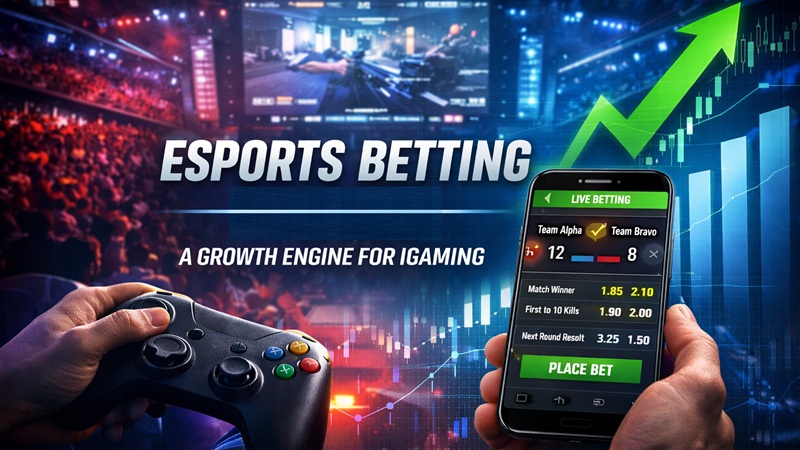
One of the defining characteristics of Esports betting is its compatibility with micro-markets and real-time wagering. Since matches are structured digitally and generate granular data, operators can offer dynamic betting options throughout the competition. This creates a rhythm that mirrors how fans consume Esports: intensely, interactively, and continuously.
For operators, this translates into more frequent betting opportunities within a single match and a product experience that feels immersive rather than transactional. It also raises the bar in terms of trading sophistication, data reliability, and platform performance. Real-time markets demand operational precision.
Governance, integrity, and long-term positioning
As Esports betting expands, so does regulatory attention. The global and digital nature of competitions require strong integrity monitoring and clear operational standards. Professional tournaments, data partnerships, and risk controls must be carefully managed to avoid reputational exposure.
For executives, the message is clear: Esports is no longer a marketing experiment. It is becoming a structural component of diversified betting portfolios.
Operators that succeed will not simply add Esports to their menu. They will design a coherent strategy around it, balancing product innovation, compliance, user experience, and retention. In a competitive iGaming landscape defined by maturity and margin pressure, Esports betting represents not just incremental growth, but strategic positioning for the next phase of the industry.