









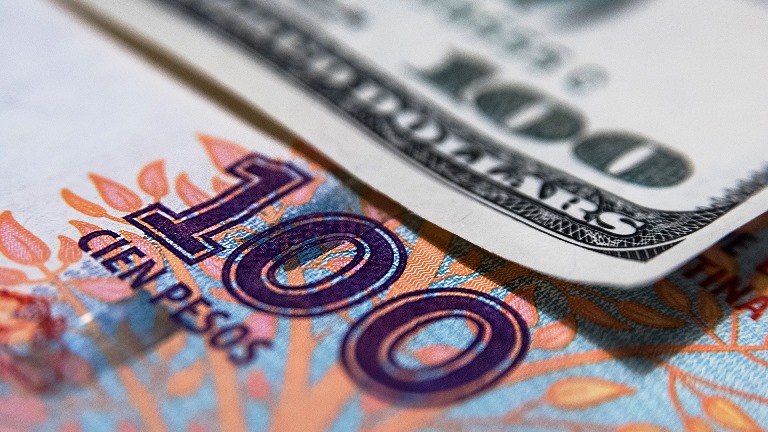
Due to the decline of economic activity that generated a new crisis and instability, in mid-2019, in Argentina, strict exchange controls were imposed in the final period of the Mauricio Macri government, which continue today under the mandate of President Alberto Fernandez. Thus, at present, to access the dollar in Argentina, it is necessary to analyze different exchange rates as a result of the aforementioned restrictions. Added to this is a complex context enhanced by difficulties in renegotiating external debt, by problems in the economy and by the pandemic that affects the world.
SOME DEFINITIONS
To deeply understand this financial issue, it is necessary to introduce some definitions. When we talk about ‘Exchange Type or Exchange Rate’, we are referring to the relationship between the value of one currency and another, that is, how many coins of one currency are needed to obtain one unit from the other. At each moment, there is an exchange rate that is determined by the supply and demand of each currency, which is known as ‘the currency market.’ However, in some systems, country’s central banks intervene in the market to establish an exchange rate that favors its economy. It is also important to understand what ‘Exchange Control’ is all about. It is an instrument of exchange policy that consists of officially regulating the purchase and sale of foreign currency in a country. In this way, the Government intervenes directly in the foreign currency market, controlling the inflows or outflows of capital. Exchange control is not good or bad by itself. Its effectiveness depends on the causes that have made it necessary, the objectives of its application and the way it operates in practice.
But what can be the causes that motivate the application of exchange controls? A clear example are the situations of high instability that threaten the economic security of a nation, such as: a) A strong loss of international reserves; b) An acceleration of the devaluation of the national currency, product of a precipitated outflow of capital and speculative movements; c) A banking or financial crisis; and d) A situation of political and social shock that threatens the stability of the country, such as a Declaration of War.
VARIOUS TYPES OF EXCHANGE
When focusing on current monetary policy in Argentina, from Fernandez Government, a brief comment can be made that clarifies the characteristics of each type of exchange that is offered today in the country.
1) Retail Dollar: the bank spread and a country tax of 30% are added to the wholesale (seller) exchange rate.
2) Card Dollar: it is similar to the previous one. The country tax of 30% is recharged on all purchases made abroad with credit and debit cards.
3) Blue Chip Swap Dollar: it comes from buying a bond or share against pesos in the local market, and selling it abroad in dollars, which is equivalent to a currency purchase operation. There is also the inverse operation, where one of these stock papers is bought abroad with foreign currency and sold in the local market against pesos, which is equivalent to a sale of dollars.
4) MEP Dollar: similar to the previous one, in the MEP, the purchase and sale of securities are made in the local market. Both pesos and dollars are debited and credited to domestic bank accounts.
5) Blue Dollar: it is achieved in informal settings. The price of the blue dollar follows the MEP. Based on this value, there will be a charge (positive or negative) based on the need for physical cash from the informal markets. Furthermore, it has an implicit risk prime due to the nature of these informal operations, with transactions that do not go through the banks (that is, they are illegal).
6) Soybean Dollar: exchange rate for producers of the oilseed complex, from grain to industrial derivatives, such as oils, flours and residues. Here, a retention of up to 33% is expected.
7) Cereal Dollar: tied to other relevant crops, such as wheat and corn, as well as sunflower. The export duty amounts to 15%.
8) Meat Dollar: a 9% withholding will be applied to sales abroad for this item. This perception covers all cuts of meat, live animals, fish, dairy products, hair, bristles and guts, feathers, other animal by-products, flour and semolina, fats, peanuts, firewood and coal, wood, wool and cotton.
9) Vaca Muerta Dollar: with the focus on developing the unconventional field of the energy sector, the new Government decided to lower the withholdings on oil exports, from 12% to 8%. It also includes mining exports.
10) Services Dollar: with the retention of $4 for each dollar exported by services and industrial manufactures, this exchange rate pays 6.7% for operations abroad.
11) Cherry or regional economy Dollar: although the Economic Emergency Law does not provide further details, it is established that the “rate for agro-industrial products of regional economies” may not exceed 5%.
12) Importing Dollar: to enter products from abroad, if the operation is authorized, the exchange rate of the interbank or wholesale market is maintained. In any case, the statistical rate was raised from 2.5% to 3% of the value of the operation.