






By Tatiana Martins, journalist at G&M News.
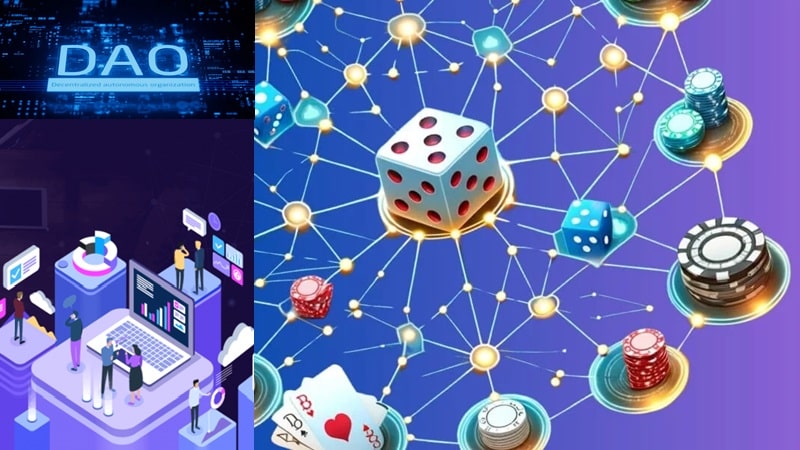
A paradigm shift is underway in the iGaming world. Decentralized Autonomous Organizations (DAOs) are emerging as a groundbreaking model for online casinos, one that challenges traditional hierarchies and promises to fundamentally reshape how platforms operate, govern, and scale.
Leveraging blockchain technology and smart contracts, DAOs introduce decentralization, transparency, and community governance to an industry long driven by opaque centralized control. For operators and investors, this trend represents both an opportunity and a strategic inflection point.
- From centralized control to community governance
DAOs are a departure from the traditional operator-driven model that has dominated iGaming. In a DAO-run casino, governance is placed in the hands of token holders, who participate in decisions, ranging from game offerings and bonus structures to treasury allocations. Smart contracts enforce these decisions automatically, removing intermediaries and ensuring execution integrity.
Platforms like RevsDAO, for instance, allow stakeholders to vote on proposals such as token buyback mechanisms, with one vote passing with over 86% approval and being executed automatically through code.
- Transparency, trust, and lowered operational overhead
Blockchain’s transparency is a game-changer for an industry built on trust and fairness. With operations recorded immutably, players and investors can audit game fairness, treasury flows, and proposal outcomes in real time. Smart contracts enable features such as “provably fair” games, timestamped and publicly verifiable, addressing one of the core trust deficits of legacy casinos.
Operational efficiency also scales. By automating repetitive tasks, platforms reduce staffing and infrastructure costs. DappRadar data shows that, by late 2024, projects using decentralized governance (like DAOs) had grown by 72%, with gambling among the top categories, highlighting the momentum behind blockchain-powered gaming innovations.
- Investor opportunities and profit-sharing structures
DAO-governed casinos open up unique investment dynamics. Operators and early supporters can receive governance tokens that offer both voting power and financial upside.
These tokens often come with perks such as profit-sharing, protocol staking, or access to exclusive events, blurring the line between players and investors. This aligns stakeholder interests with platform growth, fostering long-term loyalty and deeper engagement.
- Real-world implementation and innovators
- RevsDAO / RevsBet: enabled users with $TAX tokens to propose changes and implement them via smart contracts. An example: the community voted on a recurring buyback-and-burn mechanism, which was executed automatically.
- TrustBet On Chain: powered by Solana, aimed to distribute 50% of profits to token holders and offer governance through a voting mechanism, though delivery and roadmap execution remain pending.
- Platforms like Edgeless, FunFair, and other projects are also experimenting with decentralized logic, RNG transparency, and community protocol integrations.
- Challenges and caveats for operators and investors
While the promise is compelling, DAO-based casinos still face notable risks:
- Token concentration: large token holders (so-called “whales”) can control governance and skew decisions, undermining decentralization and player trust.
- Low participation: many token holders remain passive, limiting the effectiveness of voting and centralizing power dynamics implicitly.
- Technical vulnerabilities: smart contract bugs can lead to catastrophic exploits. Recall the 2016 “The DAO” hack that triggered a contentious Ethereum hard fork.
- Regulatory ambiguity: legal status of DAOs remains unclear across most jurisdictions. While Wyoming provides DAO LLC recognition, most countries offer no framework, raising issues around liability, compliance, and licensing.
- Strategic implications for the iGaming industry
- Early movers can shape the regulatory narrative: operators embracing DAO models can influence evolving policy frameworks, especially in jurisdictions open to blockchain innovation.
- Higher engagement, lower churn: offering players governance participation and profit share creates deeper community ties, boosting retention and reducing acquisition cost over time.
- Scalability and global reach: blockchain infrastructure allows DAOs to reach global audiences without centralized servers or intermediaries, and can tap into emerging payment ecosystems with lower friction.
DAOs are more than a blockchain buzzword: they represent a potentially disruptive shift in how online casinos operate, govern, and integrate profitability. For operators and investors in the iGaming space, DAOs offer a compelling mix of transparency, cost-efficiency, stakeholder alignment, and innovation. Yet, realizing this future requires shrewd navigation of technical, legal, and governance risks. Those who embrace DAO models thoughtfully stand to lead the next generation of decentralized, community-powered gaming platforms.