









Adjust to Player Types or Watch Your Stack Disappear
Sit at a cash table for an hour, and you’ll start noticing it. Not everyone plays the same way. One player folds almost everything. Another jumps into pots like it’s free money. That difference matters more than most beginners expect.
Understanding the types of poker players isn’t advanced strategy. It’s basic awareness. If you miss it, you end up guessing too often. And guessing, over time, costs chips.
Why Understanding Different Types of Poker Players Matters
Poker isn’t just about your cards. It’s about how your cards perform against specific opponents. Different types of poker players make different mistakes. Some call too much. Others fold too easily. A few only bet when they’re strong—and still get paid.
If you spot those habits, decisions get easier. You don’t need to force plays. You just adjust. Ignore it, and you’re basically playing the same way against everyone. That’s where problems start.
The Four Core Poker Styles
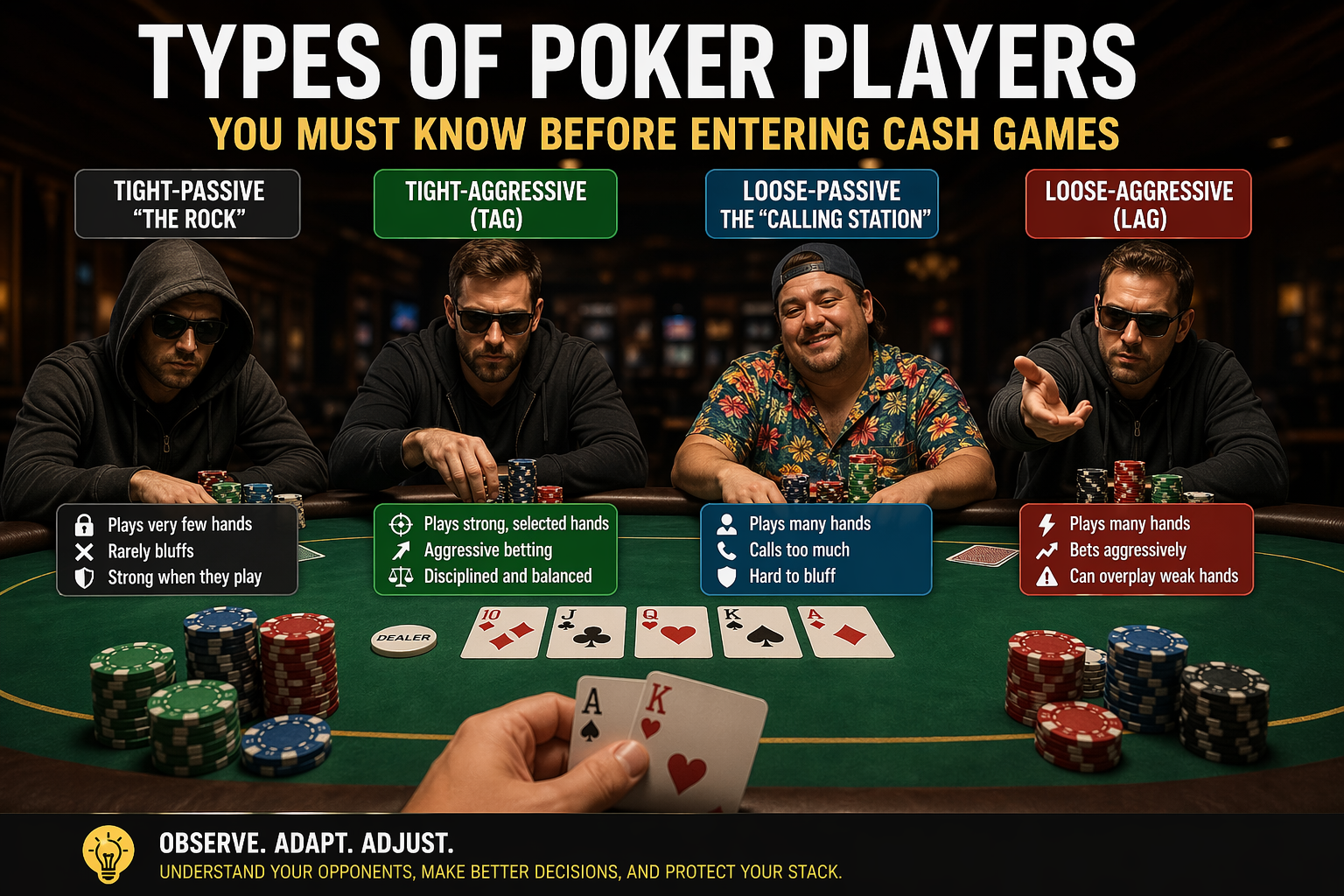
Most players fall into four basic poker styles. Not perfectly, but close enough to matter.
Tight-Passive (The “Rock”)
This player plays very few hands. When they finally enter a pot, it usually means something. They don’t bluff often. They don’t chase weak draws. On the surface, they look solid.
The issue is predictability. When they show aggression, they’re strong most of the time. You don’t need to test that often. Folding is usually the right call.
Tight-Aggressive (TAG)
This is the kind of play most successful players want to adopt. The tight-aggressive player selects his/her starting hands carefully and makes aggressive bets on them. They always raise hands rather than limp and create some trouble for anyone they consider weak.
In response to such a player, balance is key. Being too passive means that the other player dominates the game. However, being too aggressive means facing stiff competition.
Loose-Passive (The “Calling Station”)
This is one of the most common different types of poker players, especially in low-stakes games. They call too much. Preflop, postflop—it doesn’t change much.
Bluffing them rarely works. They’re not folding often enough. The adjustment is simple: value bet more. If you have a strong hand, bet it. They’ll usually call.
Loose-Aggressive (LAG)
This player brings energy to the table, whether you want it or not. They play a lot of hands and bet aggressively. It can feel uncomfortable at first.
The key is patience. You don’t need to fight every hand. Let them build pots when you’re strong. They often overplay weaker holdings.
What Type of Poker Is Played in Casinos?
The majority of the cash games at casinos are played using the game of Texas Hold’em. This is because it is the basic game that anyone can easily master.
There are many other types of card games that are played; however, the two games mentioned above dominate in an average casino. The games feature commonly in lists of the most popular casino card games.
Reading Poker Styles in Real Time
You don’t need to guess player types; you observe them. Watch how often someone enters pots. Look at their bet sizes. Notice how they react after losing a hand.
For example, if a player suddenly starts betting bigger after a loss, they might be tilting. That doesn’t last forever, but it’s a window. Good players aren’t static, and neither are you. Adjust as the table changes.
What Is the 80/20 Rule in Poker?
The 80/20 rule in poker suggests that a small number of decisions drive most of your results. In practice, that means big pots matter more than small ones. One poor decision in a large hand can erase steady gains.
That’s why discipline matters. You don’t need to win every hand. You need to avoid costly mistakes.
Is Poker Luck or Skill Percentage?
Poker involves both luck and skill. In the short term, luck is noticeable. Cards fall randomly, and outcomes can swing quickly.
The more you play, the more skill becomes important. People who know about various poker types, how to take risks, and make wise decisions will perform well eventually. There isn’t any fixed ratio, but success is not based on luck.
Do Good Poker Players Count Cards?
No. Card counting is linked to games like blackjack, not poker. In poker, you’re not tracking a fixed deck against the house. You’re reacting to other players.
What matters is remembering tendencies, meaning how people bet, how often they fold, and how they react under pressure.
End Notes
Understanding the types of poker players changes how you approach the game.
Instead of reacting, you start recognizing patterns. Decisions become clearer. Mistakes become easier to avoid.
Cash games reward that awareness over time. Ignore it, and you’re left hoping the cards carry you. Sometimes they will. Most times, they won’t.