









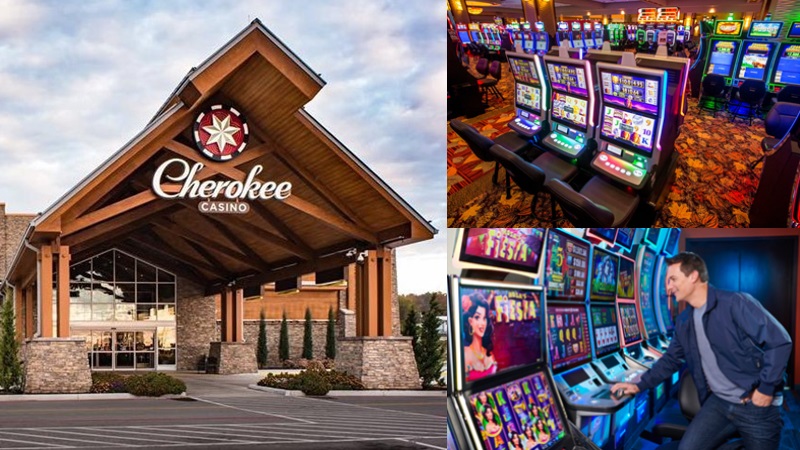
Now that we have an understanding on the type of games that you will find in a Commercial Casino, let’s talk about the second biggest market in the United States: Class II – Bingo and Tribal casinos.
Tribal casinos are always located on reservation land, that is the main requirement to qualify under the designation of Tribal casino. The land often belonged to the tribe for generations. In some instances, Native Americans put the land into a trust and asked for the U.S. Department of Interior to declare the land sovereign to a tribe.
Tribal government gaming is regulated by a combination of federal, state, and tribal authorities, depending on the type of gaming conducted. This regulatory scheme is outlined in a federal law known as the Indian Gaming Regulatory Act (IGRA), 25 U.S.C §2701 et seq.
Why do some states not have Indian casinos?
There are two main reasons a state may not have any Indian casinos:
1) Some do not have any Indian reservations, like Georgia and Tennessee.
2) The state has not reached a gaming compact with tribes within the border, for example Utah, South Carolina, and Alaska.
Types of games offered
Tribal gaming casinos are built on sovereign land to be regulated and operated by a Native American tribe. Since there are specific rules based on IGRA, the games that are offered may fall into two categories, and there are times when both can be offered:
a) Class II Gaming: which is based on the game of bingo and utilizes devices that aid in the playing of bingo. Technically and visually speaking, many bingo terminals look very much like slot machines. However, players will clearly see that they have a bingo card displayed on it and the wins and losses of the games are still governed by the rules of bingo. One of the requirements for these player terminals is to disclose the fact that the reels and symbols on them are for “Entertainment purposes only” and these will not affect the outcome of the game. The outcome of these games will always be based on the bingo card numbers and patterns. Recognized tribes generally can establish Class II Gaming on their land if the state allows gaming. Class II Gaming may also include other games such as pull tabs and non-banked card games, which are games which players play against each other instead of against the house.
b) Class III Gaming: which are the same Vegas-style games approved for commercial casinos, but under a different type of scrutiny based on the requirements that the state and the tribe have agreed on based on a gaming compact approving such games on their land. That compact must be approved by the Federal Government. Sometimes, these compacts could even omit certain games. For instance, tribes in Florida, Oklahoma and Minnesota cannot have certain table games as their compact does not allow for them as of today.

Video Lottery Terminals (VLTs)
Another form of regulated gaming in the U.S. are video lottery terminals (VLTs), also sometimes known as a video gaming terminal, video slots, or the video lottery which ultimately are a type of electronic gambling machines. They are typically operated by a region’s lottery and situated at licensed establishments such as bars and restaurants.
Based on product types, the market is divided in three major categories: 1) Video Gaming Machines, 2) Video Poker Machines, and 3) Mechanical Reel Gaming Machines that held the largest market share in 2022, according to a report issued by 360 Research Reports.
VLTs exact operation depends on the technical requirements established for the market in which they will be operated. Most VLTs are stand-alone devices containing a random number generator and inter-connected to a centralized computer system that allows the lottery jurisdiction to monitor gameplay and collect revenue information.
In some jurisdictions, VLTs do not contain a random number generator, and display results from a fixed pool of predetermined outcomes that are controlled by the central system (in similar fashion to scratch-off lottery tickets).
Lotteries in the U.S. were considering VLTs since the beginning of 1980s, by jurisdictions such as New York and New Jersey, but those efforts were limited and didn’t render positive results. The first VLTs in the country were installed in late 1983 by Bellevue, Nebraska, as part of its municipal lottery. Eleven other local lotteries in Nebraska followed suit, until the state banned the devices, effective 1985 posing another failure for these devices.
Later in 1989, South Dakota became the first state to adopt VLTs. In a unique arrangement with private industry, the machines are owned by private companies, but monitored by the South Dakota Lottery via a centralized computer system that assures the integrity of the games.
Other U.S. jurisdictions which have had legal video lottery include Oregon, Illinois, Rhode Island, Delaware, New York, Ohio, West Virginia, Louisiana, Maryland, Montana and, in the past, it was offered in South Carolina.
The U.S. Virgin Islands have also legalized video lottery, which is managed by Southland Gaming of the Virgin Islands. The local governments in St. Thomas and St. John use the revenue generated by the video lottery to fund various government programs on the islands; primarily focusing on educational efforts.
Another type of gaming establishment where VLTs are available is Racinos. Racinos differ from traditional VLTs in that all video lottery games are played on a gaming machine within an On or Off-track wagering facility, very similar to commercial and traditional slots. States that have legalized VLTs in racinos are Delaware, Rhode Island, Louisiana, New York, Ohio, and West Virginia.
Characteristics of VLTs
The main differences in VLTs that distinguish them from Casino slots are:
a) Wagering rules such lower bet amounts as well as lower maximum awards. Players go into a casino with USD 500 and want to win USD 5,000, but a VLT player goes into a bar with USD 50 and the Maximum award possible will be close to USD 500.
b) The nature of the game content.
c) The volatility is geared towards a very different type of player.
d) Different models for dealing with problem gambling that could vary from market to market. Some markets let the players set limits on the amounts to be wagered, and even the time of the day when the games will be available.

Central determination lotteries
When we talk about Central determination systems, what we are referring to is VLT markets in which the games in the casinos are not different than the Class III slot machines in Las Vegas or other mature markets at first sight, but if you happen to look at the technology used and certain other characteristics, they are very different indeed.
The states of Washington and New York are the only U.S. jurisdictions with this type of technology. In Washington, the central-determinant machines are in Indian casinos, and to list one of the limitations, we can start with betting limits, for instance. In New York, games must return at least 90 percent of the wagers. Because these are heavily taxed machines, they must operate as a finite-result system and have extra elements to allow them to stay within those rules. Video poker, for example, will award “bonus” payments if players do not follow simple strategies for obvious wins.
For these two markets is a bit easier to make up for those restrictions in volume, particularly in New York, where Genting recently opened the state’s largest VLT venue at Aqueduct and New York City’s first casino, Resorts World New York.
Central determination VLTs can be developed by using electronic scratch ticket systems and/or online lottery games. The system utilizes player terminals with video displays which allow players to purchase chances and obtain game result information (almost identical to slot machines) and a manufacturing computer which securely creates the finite set of chances (pool of outcomes or game results) used in the scratch ticket portion of the system. The system also utilizes a central computer which stores and transmits game information and makes draws for the online lottery game and an electronic central security and accounting system.
In either case, scratch ticket game or online lottery game, preexisting outcomes are dispensed in an electronic format to players through the player terminals on an on-demand basis, independently of any activity at player terminals. The way the system works consists of a finite number of Electronic Scratch Tickets, a certain number of which, if drawn, entitle a player to prize awards at various levels. The tickets are designed from a template created in Game Sets in conformity with the jurisdictional requirements on a computer from which Scratch Tickets are randomly selected and placed into Subsets. These subsets are ultimately delivered to players in an electronic manner and disposed of as those outcomes shall not be reused.
Each game has a specific set of rules, including: the theme and types of symbols used; the total number of tickets in the game; the ratio or mix of winning and losing tickets; the prize structure, including number and dollar value of each prize, and price of a single ticket.
Because of the system requirements, the suppliers serving these markets are limited, and the main terminal suppliers are ones with experience with system-based gaming in Class II markets, as well as traditional Class III casinos.

HHR, Historical Horse Racing
Historical horse racing machines look and function a lot like slots from the user’s point of view, but they generate results using the outcomes of past horse races. In general, each round of play begins with the terminal’s Randon Number Generator selecting one race at random from a database of up to a hundred thousand races that occurred in the past. Historical horse racing or historical horse wagering is a generic term for ‘instant racing.’
It is not surprising that historical racing is a controversial form of gaming. Racetracks typically attempt to offer historical horse racing machines in states where commercial casinos are not legal. The terminal does not provide any names and dates regarding the actual event, but gives a handicapping form so players can select three horses, just as they would at a live race. However, many terminals offer a way for players to automate the selection process, so they end up with a machine that looks and feels just like a slot.
Only the last few seconds of the race are displayed on a small part of the screen. The rest of the monitor displays reels and symbols to show the player the outcome, but as the technologies explained before, these graphical representations are only for entertainment purposes. Today, historical horse racing is available in Kansas, Kentucky, Louisiana, New Hampshire, Virginia, and Wyoming
A few facts about these emerging adjacent markets
In this part of the article, there’s one thing to notice: every one of these technologies wants to give players a slots-like experience in states or jurisdictions where full-fledged slots aren’t legal. For example, Class II Gaming uses Bingo cards; VLTs and Central Determination lotteries use scratch off tickets or online lottery models, and Historical Horse racing utilizes pari-mutuel horse racing betting with a slots-like player interface.
Many of the big game manufacturers have decided to enter the adjacent lottery markets in efforts to generate more revenues via new distribution. The most likely scenario in the U.S. is that the state lotteries will continue to grow using already known and approved technologies. However, they will not offer a full range of gaming services as the dynamics of gaming in the U.S. is very different than a country such as Canada, where the Government historically owns both casinos and lotteries.
Knowing what the future will bring, State Lotteries and jurisdictions where commercial gaming is not fully developed need to find new revenue streams to compensate for loss of market share.
In the third and last part of this series, we will provide some details regarding the environment offered and the technology permitted by State Traditional lotteries and the atmosphere for online gaming across the United States.