









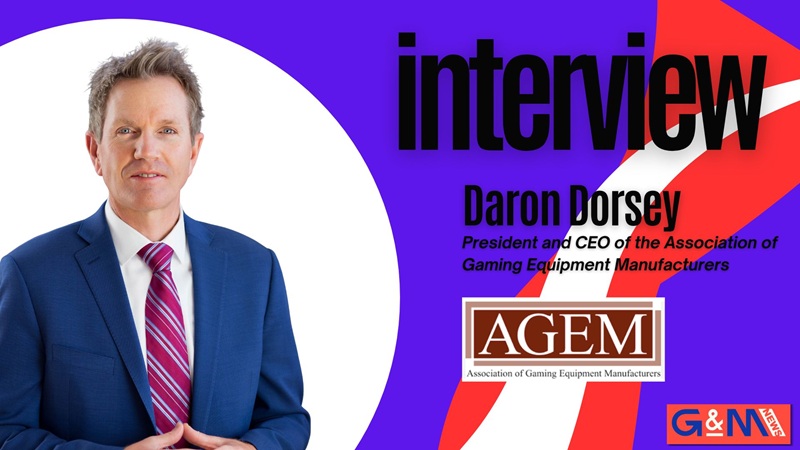
By Tatiana Martins, journalist at G&M News.
You have been leading the Association for over a year now. How would you describe your personal and professional balance in the position? What have been your main takeaways so far?
The personal and professional balance at AGEM has been similar to my roles as a General Counsel and Compliance Officer at regulated gaming companies. Rather than advocating for, advising or assisting one organization, though, I now get to do that for a diverse group of suppliers of all shapes and sizes, both public and private. Finding a solution or helping to solve a problem for an entire sector of our industry, rather than a single company, is very rewarding and something I enjoy more than I thought I would when moving into this role. While doing that, I find that the issue profile for our gaming supplier group is similar for large and small companies alike and that this industry, while extremely competitive, remains a collegial and collaborative one. I do not know if there are other industries where competitors enjoy being colleagues as much as we do in ours, but that is something I have seen week in and week out during my time at AGEM.
G2E Las Vegas 2025 brought together a strong global audience and showcased the latest gaming technologies. How was your experience at this year’s event, and what key trends stood out for you in terms of innovation and industry collaboration?
G2E 2025 was another successful event, and we greatly appreciate the efforts of our friends at RX and the AGA for what they do with G2E. From my perspective, the trends of our changing global trade policies and practices, combined with challenges in the larger economic environment affecting our customers and the ongoing challenges from the unregulated and unauthorized operators, were common to discussions on both the exhibit floor and in the education and conference programming.
How would you assess the current business environment for US-based gaming equipment manufacturers? Are you seeing renewed momentum or any lingering post-pandemic challenges?
AGEM members, whether with US-based facilities and operations or serving US-based customers from operations outside the US, operate and manage their businesses to serve all regulated and authorized gaming markets across the globe. While our industry stabilized in the post-pandemic period, recent disruptions and material changes to the trade frameworks in which they operate their businesses are having a large impact on our highly regulated gaming companies and they are all navigating these challenges as best they can.
Land-based gaming continues to evolve amid competition from online entertainment. What are the main issues manufacturers are facing today in markets such as Las Vegas and other U.S. regions?
The changes to the global trade framework will be an ongoing challenge for manufacturers with operations in the US for the foreseeable future. At the same time, the persistent threat of unlicensed and unauthorized gaming operators continues to grow, both in the land-based and online arenas. The trade framework should hopefully become more certain in the years ahead so that manufacturers can adjust their operations in order to make long-term strategic decisions within it. Besides, the continued growth of unlicensed and unauthorized gaming in various forms throughout the US region remains a significant challenge to the regulated and authorized gaming industry.
What are your perspectives for the future of the gaming manufacturing sector? In your view, what changes or initiatives are most needed to ensure sustainable growth and competitiveness for AGEM members?
Our supplier sector looks forward to more certainty being established within the global trade framework so companies can make more long-term planning and strategic decisions. The timeline for gaming companies to create products and innovations, get them approved and authorized for use in chosen markets, and the ultimate commercialization of those products and innovations takes years to come to fruition. More certainty and stability in the global trade framework, coupled with a more collaborative regulatory environment from our gaming agencies, are critical to ensure sustainability and competitiveness amongst our AGEM member companies.